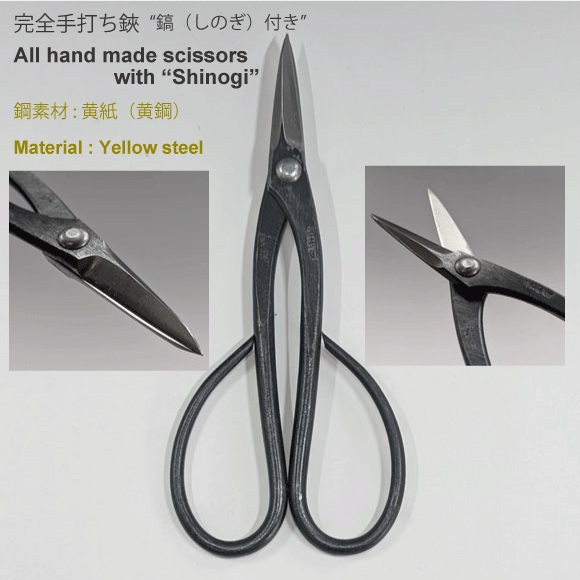
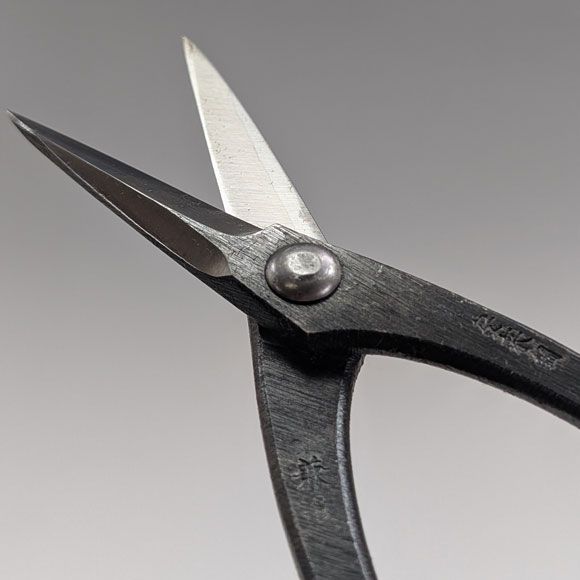
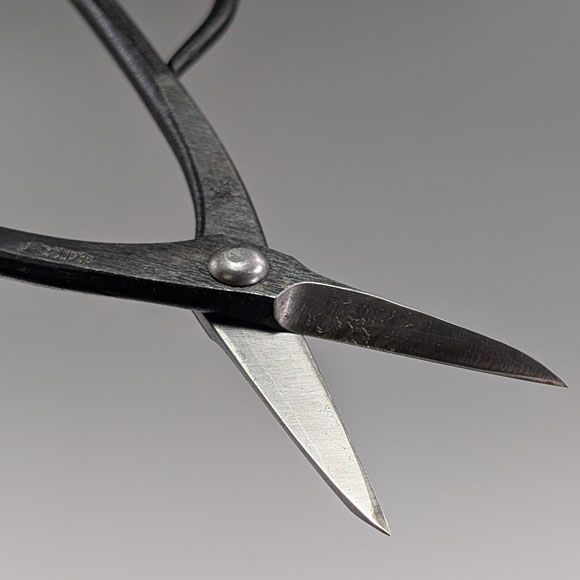
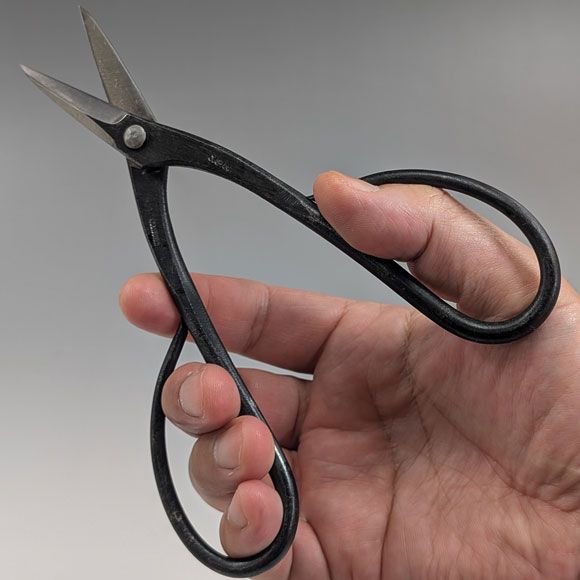
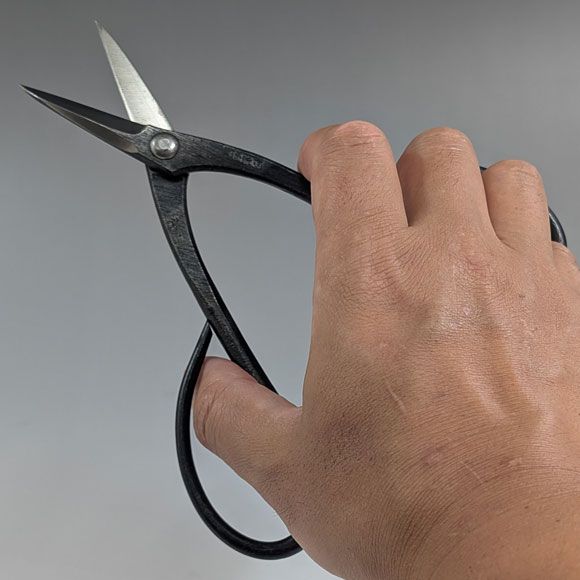
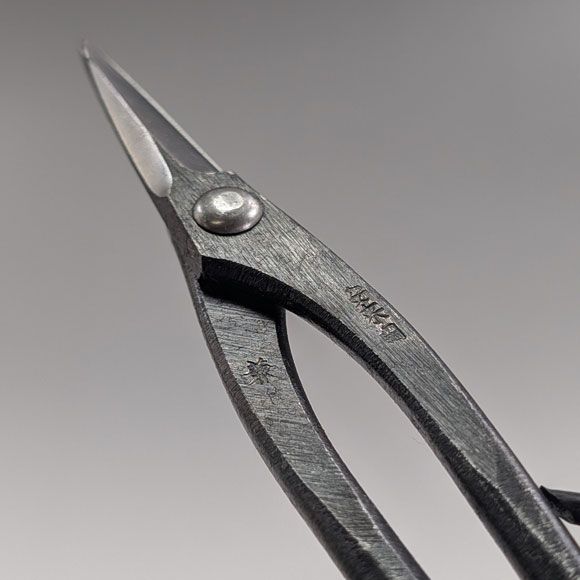
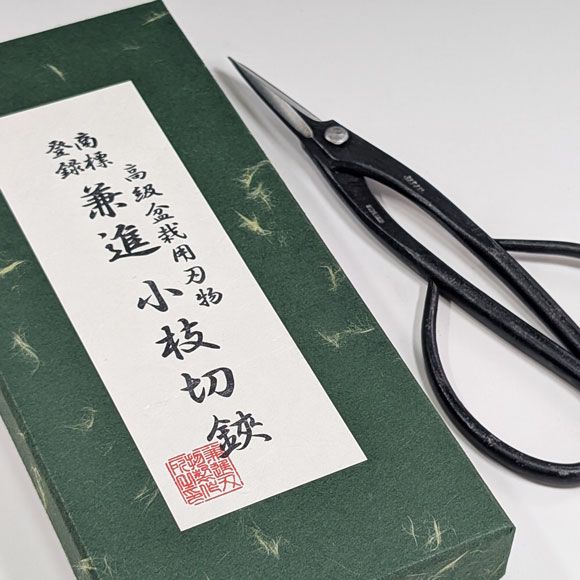
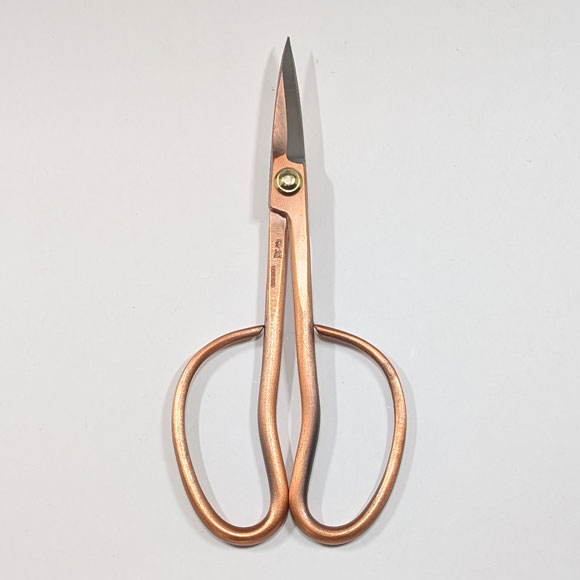
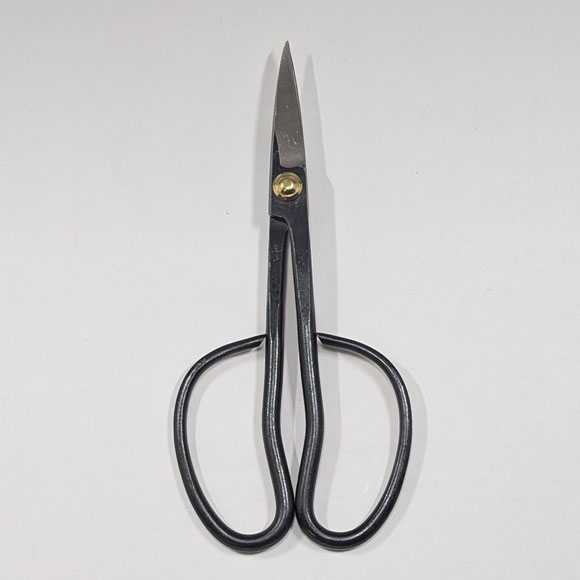
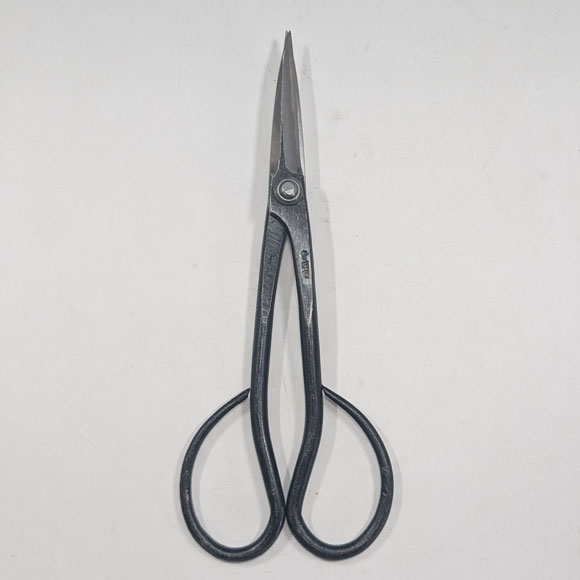
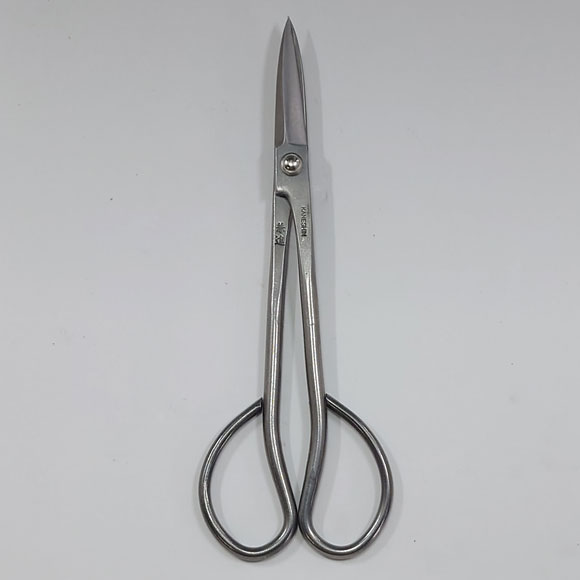
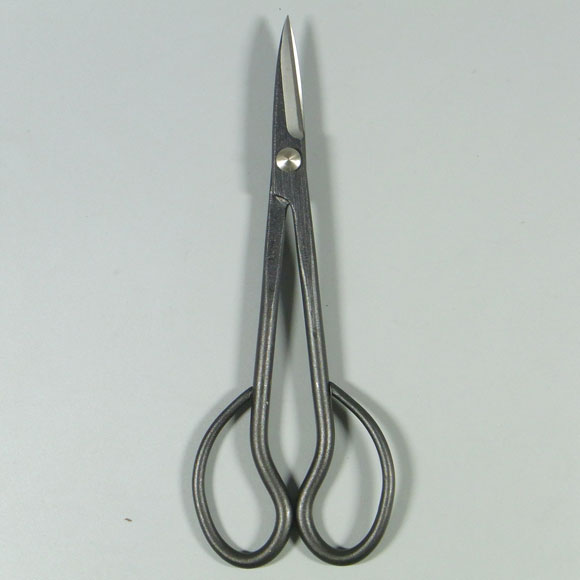
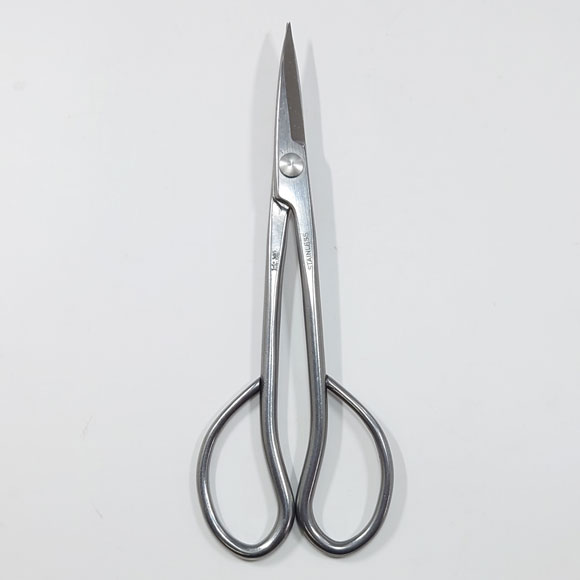
[Only stock] All hand-made bonsai trimming Scissors with Shinogi - yellow steel - (KANESHIN) " Length 170mm" No.601D
*This item is available only while supplies last.
Total length: 170mm
Blade length: 40mm<
Material: Yellow Steel (Kigami)
Suitable for small to medium-sized bonsai. Used for trimming twigs, leaf cutting, and bud pinching.
These are fully hand-forged shears crafted from a single iron rod.
They are made using traditional Japanese sword-making techniques that combine soft iron with hard steel, resulting in a tool that possesses both hardness and toughness (resilience).
The steel used is "Yellow Steel" (Kigami) from Yasuki Steel.
Yasuki Steel refers to steel produced at the Yasuki Works of Hitachi Metals, Ltd., located in Yasuki City, Shimane Prefecture. This region has long been famous as a production center for *tamahagane* (the steel used for Japanese swords).
Common types of Yasuki Steel used for cutlery include Blue Steel (Aogami), White Steel (Shirogami), and Yellow Steel (Kigami).
In terms of quality and price, the hierarchy is generally: Blue Steel > White Steel > Yellow Steel.
However, both Blue Steel and White Steel have their respective advantages and disadvantages. Hard Blue Steel is often used for sashimi knives, where chipping would be a significant issue. White Steel is slightly less hard than Blue Steel but is preferred for tools like *deba* knives and hatchets, where a balanced level of hardness is desired.
While Yellow Steel is slightly inferior in quality compared to Blue and White Steel, it remains a top-tier Yasuki Steel. It possesses sufficient hardness and toughness for cutlery applications. Additionally, as it is more reasonably priced than Blue or White Steel, the final cost of the product can be kept lower.
(About the "Shinogi")
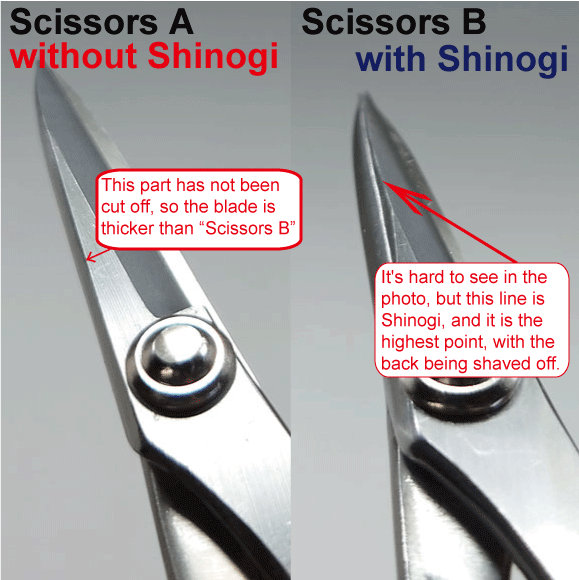
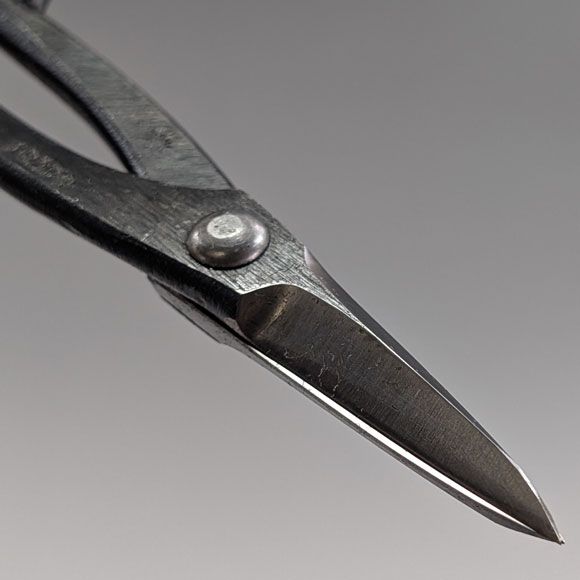
"Shinogi" is a shape that has been applied to Japanese swords since ancient times. It refers to the ridge line (the high, mountain-like part with corners) that runs along the blade between the "blade" and the "back of the sword".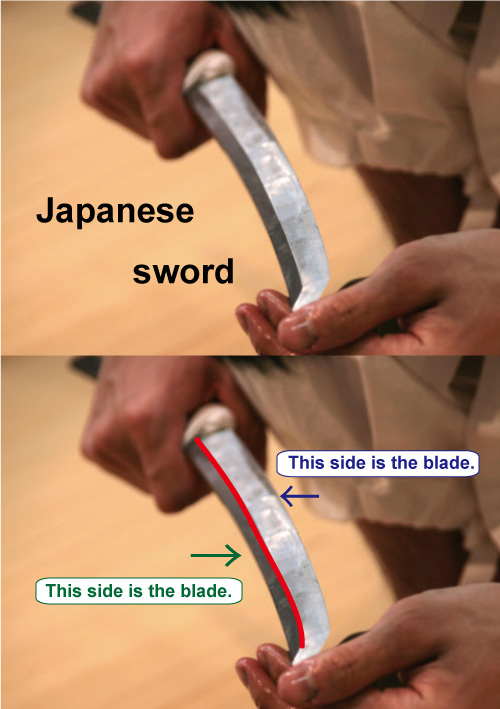
The reason for making "Shinogi" with bonsai scissors is that one side (the side without the blade) must be sharpened to make "Shinogi".
By sharpening it, the tip of the blade becomes thinner, making it easier to work in small areas.
If you look at the comparison image of "With Shinogi "and "Withought Shinogi ", you can see that "Scissors A" does not have "Shinogi" and "Scissors B" has "Shinogi". This makes the blade thinner.